Sri Lanka court halts development at Chemmani mass grave site
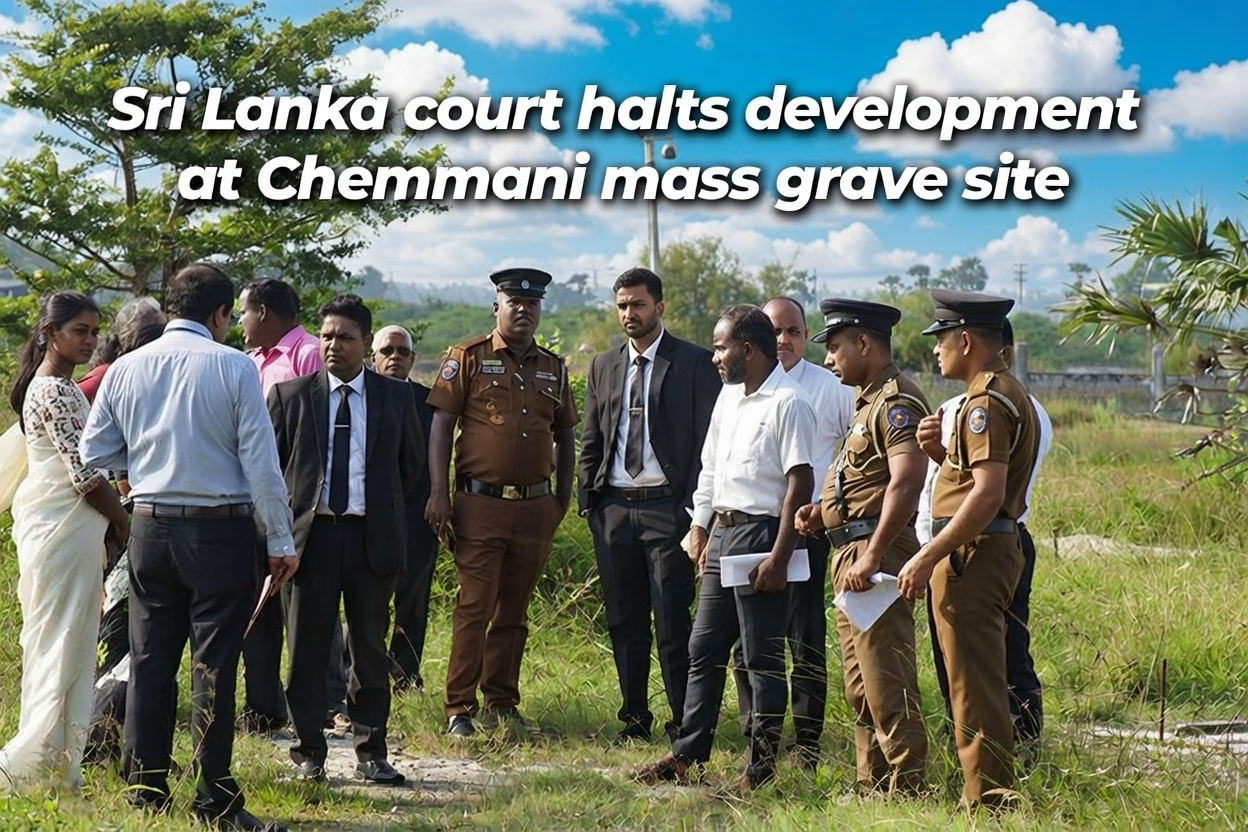
A Sri Lankan court on Monday ordered that no development work be carried out at the Chemmani Sindhubathi mass grave site in Jaffna-considered country’s second largest, without prior judicial approval, after excavations were stalled for four months due to heavy rains.
Lawyer Ranitha Gnanarajah, appearing for victims, said Jaffna Magistrate Selvanayagam Lenin Kumar issued the order after considering a request from attorneys representing the victims during a hearing on January 19.
Attorneys submitted that no permission should be granted for any form of development within the premises until excavation activities are fully completed.
The magistrate ordered that nothing be done in future without the court’s approval,” Gnanarajah told reporters.
The Ministry of Justice had allocated nearly 20 million rupees for a further two months of excavation, but persistent rainfall prevented work from resuming.
Following the court session, Magistrate Lenin Kumar, lawyers, officials from the Office on Missing Persons, the judicial medical officer and excavation team inspected the site, where provincial reporters filmed stagnant rainwater at several locations.
Attorney V.S. Niranjan said it was decided to drain the accumulated water on February 9, 2026, under the supervision of the judicial medical officer and with assistance from the Nallur Pradeshiya Sabha. The court will then set a new date for excavation.
Excavations at Chemmani began on May 15, 2025, under the supervision of forensic archaeologist Professor Raj Somadeva and Jaffna Judicial Medical Officer Sellaiya Pranavan, following a court order. The second phase, conducted over 45 days with previously approved funds, concluded on September 6, 2025. By then, 239 of 240 skeletons, including those of children, had been exhumed.
Artefacts recovered alongside human remains include infant feeding bottles, toys such as a doll, children’s shoes and school bags.
Sri Lanka’s largest mass grave to date is the Mannar Sathosa site, where 376 human remains, including 28 children, were unearthed.